A Real Pickle of a Peale
Forgery and fine art.
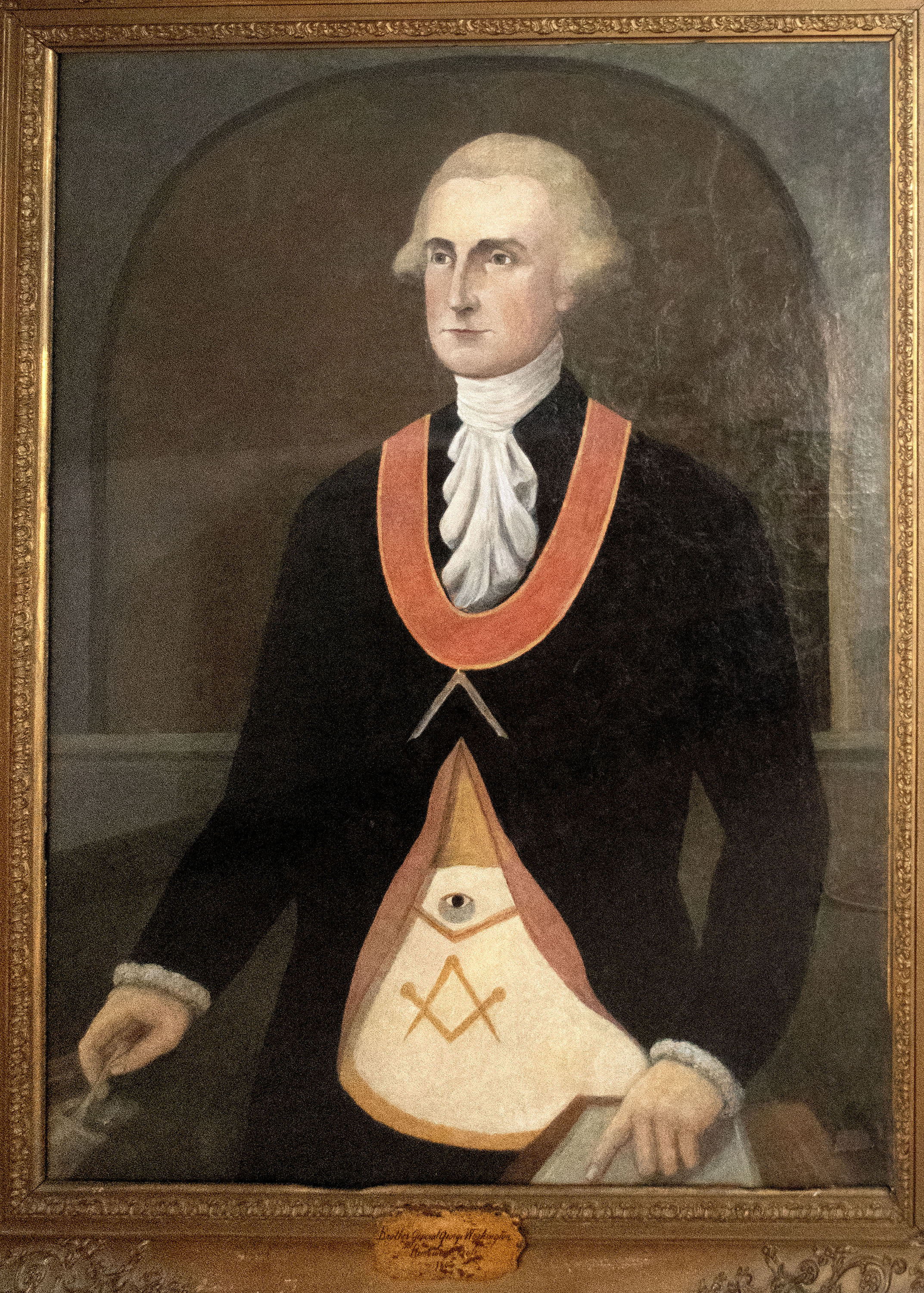
In March of 1944, the Elm published an article, “Valuable Portrait Painted by Peale Given to College.” At the previous Birthday Convocation, James M. Swartz and James W. Stevens, two Baltimore businessmen, gifted the college a portrait of George Washington in his Masonic regalia, purportedly painted by Rembrandt Peale in London in 1803. The gift was in memory of their fathers, Mano Swartz, who owned the painting, and Robert N. Stevens, a Kent County native. For decades, this painting hung in the President's office and was even published in the Bulletin. Along with the painting, two other items were included, though only one remains: two small brass plaques that at one time were on the back of the painting, and a 1851 letter from Peale discussing the painting. Only the letter remains.
 In 2000, Carol Eaton Soltis, a Philadelphia-based art historian, was brought in to
authenticate the painting. A painting by Rembrandt Peale would be worth a good deal
of money, and the subject matter, Washington in Masonic regalia, would increase that
value. Sadly, the painting is not by Rembrandt Peale; this was a blow to the College,
but they did not hide away from the discovery, and several national media outlets
wrote articles about it. This was actually very brave. When faced with theft or forgery,
many museums and cultural institutions do not make these facts known. They would rather
hide the fact for fear that it will cause a loss of trust in the institution. This
often complicates efforts to retrieve the lost pieces.
In 2000, Carol Eaton Soltis, a Philadelphia-based art historian, was brought in to
authenticate the painting. A painting by Rembrandt Peale would be worth a good deal
of money, and the subject matter, Washington in Masonic regalia, would increase that
value. Sadly, the painting is not by Rembrandt Peale; this was a blow to the College,
but they did not hide away from the discovery, and several national media outlets
wrote articles about it. This was actually very brave. When faced with theft or forgery,
many museums and cultural institutions do not make these facts known. They would rather
hide the fact for fear that it will cause a loss of trust in the institution. This
often complicates efforts to retrieve the lost pieces.
In the Fredericksburg Lodge in Virginia in 1752, a twenty-year-old George Washington
was initiated into Freemasonry. He remained a devoted member until his death. Masonic
rites were performed for his funeral by the Alexandra Lodge. They also created their
own towering monument to Washington, the George Washington Masonic National Memorial. While much has been written about Freemasonry, it remains a mysterious organization.
The inherent secrecy among its members and the fact that many prominent men throughout
history have been members of Freemasonry only adds fuel to conspiracy theories. In
Colonial America, many of those who joined were at first attempting to follow the
European upper classes. Ironically, this bred a fraternal brotherhood that included
many of our Revolutionary heroes. Many of the early Americans who joined were influenced
by the philosophies emerging regarding self-determination, the ideals and virtues
of the Republic,and even the freedoms enshrined in the First Amendment. In the 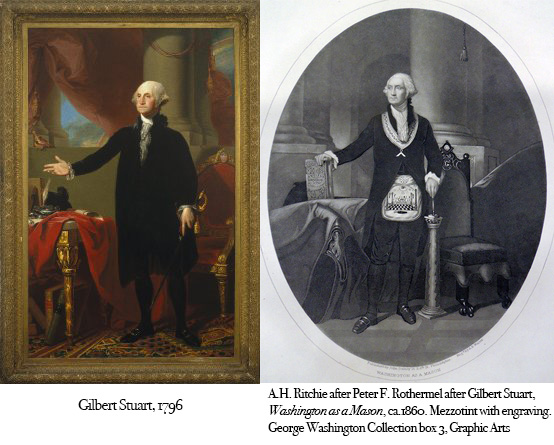 troubling times that came, knowing someone as a fellow Masonic brother meant you could
rely on them and they could rely on you. When the nation was still made up of fragmented
colonies, each fighting for itself, this was a strong bond across borders.
troubling times that came, knowing someone as a fellow Masonic brother meant you could
rely on them and they could rely on you. When the nation was still made up of fragmented
colonies, each fighting for itself, this was a strong bond across borders.
There is only one image of Washington in his Masonic regalia, the apron, the collar, with the tools and symbols. It was based on a 1796 portrait by Gilbert Stuart; the pose remains the same, but the costume, background, and inclusion of other Masonic symbols were added. To have a painting in the costume by a Peale would have been an extremely rare piece.
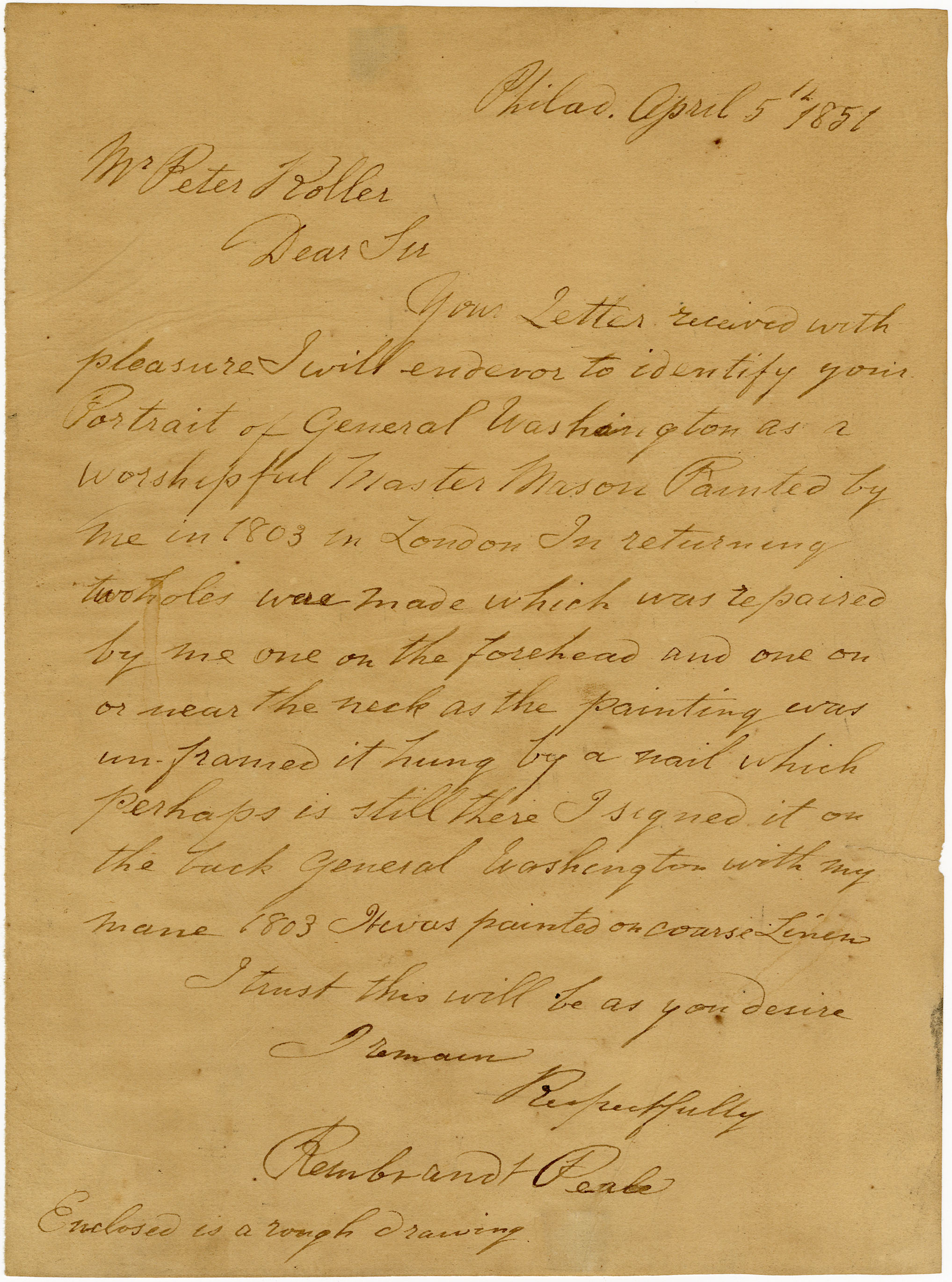
The letter from Rembrandt Peale, also believed to be a forgery, is dated April 5th, 1851, and was sent to Mr. Peter Roller. It gives information from the painter so Roller can identify the painting as Peale's. It mentions some holes, made by nails, that were repaired; it also says he painted it in London in 1803. The letter says that drawings are enclosed, but if they ever did exist, they are long gone. Peter Samuel Roller (1823-1894) was a prominent Virginia merchant. While there are family papers at the Virginia Historical Society, there is not much personal correspondence, and none with Peale to confirm the communication. The repaired holes are in the painting.
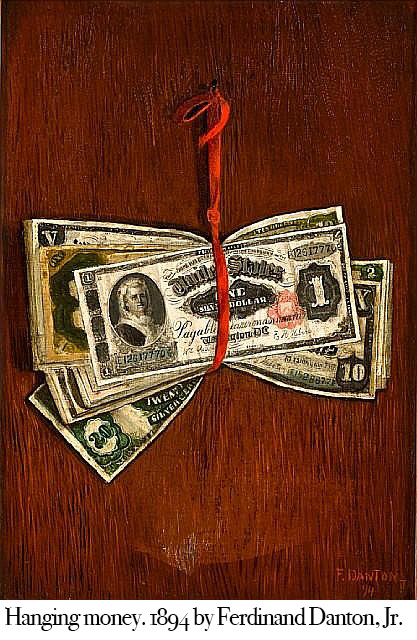 Looking with clear eyes, it is rather obvious that the forged painting lacks the skill
evident in other paintings by Peale. So, who was the forger? While it cannot be confirmed,
it is believed to be Ferdinand Danton, Jr. His own work consisted of oil landscapes,
hunting dogs, and Trompe l'Oeil of currency, but he is better known as a forger of
Peale's work. He was born in 1877. He had a wife named Hernietta, and they had at
least three sons. He used at least four names and spent two years in prison for forging
paintings. He died in poverty in New York City in 1939. Washington College was not
the only victim of his work. The Historical Society of Delaware received seven portraits,
also supposedly by Rembrandt Peale, of Delaware dignitaries in the 1930s. All done
by Danton. To make his cons more convincing, he would also fabricate supporting documents,
like sales receipts. In our case, it was the letter. The Delaware Museum of Art was
said to have a file on him. It is hard to say if Mano Swartz knew about the forgery;
he said he obtained the portrait from a family in Virginia. He was an avid collector
of Washingtoniana.
Looking with clear eyes, it is rather obvious that the forged painting lacks the skill
evident in other paintings by Peale. So, who was the forger? While it cannot be confirmed,
it is believed to be Ferdinand Danton, Jr. His own work consisted of oil landscapes,
hunting dogs, and Trompe l'Oeil of currency, but he is better known as a forger of
Peale's work. He was born in 1877. He had a wife named Hernietta, and they had at
least three sons. He used at least four names and spent two years in prison for forging
paintings. He died in poverty in New York City in 1939. Washington College was not
the only victim of his work. The Historical Society of Delaware received seven portraits,
also supposedly by Rembrandt Peale, of Delaware dignitaries in the 1930s. All done
by Danton. To make his cons more convincing, he would also fabricate supporting documents,
like sales receipts. In our case, it was the letter. The Delaware Museum of Art was
said to have a file on him. It is hard to say if Mano Swartz knew about the forgery;
he said he obtained the portrait from a family in Virginia. He was an avid collector
of Washingtoniana.
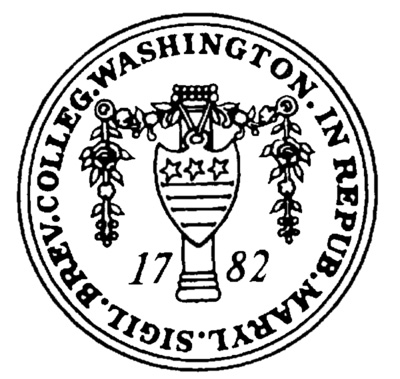 Washington College has a longstanding connection to the Peale family. Patriarch Charles
Willson Peale, a Chestertown resident, was a pre-eminent portrait painter for those
in Maryland and on the Eastern Shore. From notes on the first ledger of the College,
which sadly was destroyed in the 1916 fire, we learn that Miss Peale, Charles' daughter
and Rembrandt's sister, taught at the college and was paid one pound fifteen shillings
for a sketch of the seal in 1784. This was actually Elizabeth Callister Peale (1749-1789),
who taught with her sister, Sarah Callister, in 1783. Both were paid seventy-five
pounds as salary. They hold the distinction of being the first female university teachers
in U.S. educational history. Elizabeth was the widow of St. George Peale (1745-1778),
Charles' brother-in-law, and an accomplished miniature painter.
Washington College has a longstanding connection to the Peale family. Patriarch Charles
Willson Peale, a Chestertown resident, was a pre-eminent portrait painter for those
in Maryland and on the Eastern Shore. From notes on the first ledger of the College,
which sadly was destroyed in the 1916 fire, we learn that Miss Peale, Charles' daughter
and Rembrandt's sister, taught at the college and was paid one pound fifteen shillings
for a sketch of the seal in 1784. This was actually Elizabeth Callister Peale (1749-1789),
who taught with her sister, Sarah Callister, in 1783. Both were paid seventy-five
pounds as salary. They hold the distinction of being the first female university teachers
in U.S. educational history. Elizabeth was the widow of St. George Peale (1745-1778),
Charles' brother-in-law, and an accomplished miniature painter.
The painting was removed to the Starr Center, and other works have since been highlighted in the President's office and Bunting. While an original Peale would be an exciting find, the forgery makes for an interesting story.