Our National and State Parks
“What a country chooses to save is what a country chooses to say about itself.” - Mollie Beattie; first female director of the U.S. Fish and Wildlife Service
Natural Bridge is a National Historic Landmark and geological formation in Virginia that is made
up of a naturally occurring 215-foot-high arch that spans 90 feet. Estimated to have
formed during the Ordovician Period 500 millionyears ago, the Natural Bridge was a
sacred site of the Native American Monacan tribe. According to local lore, George
Washington visited the Natural Bridge in 1750 as a young surveyor, though the only
evidence to support this claim are the initials “G.W.” that are carved into the wall.
In 1774, Thomas 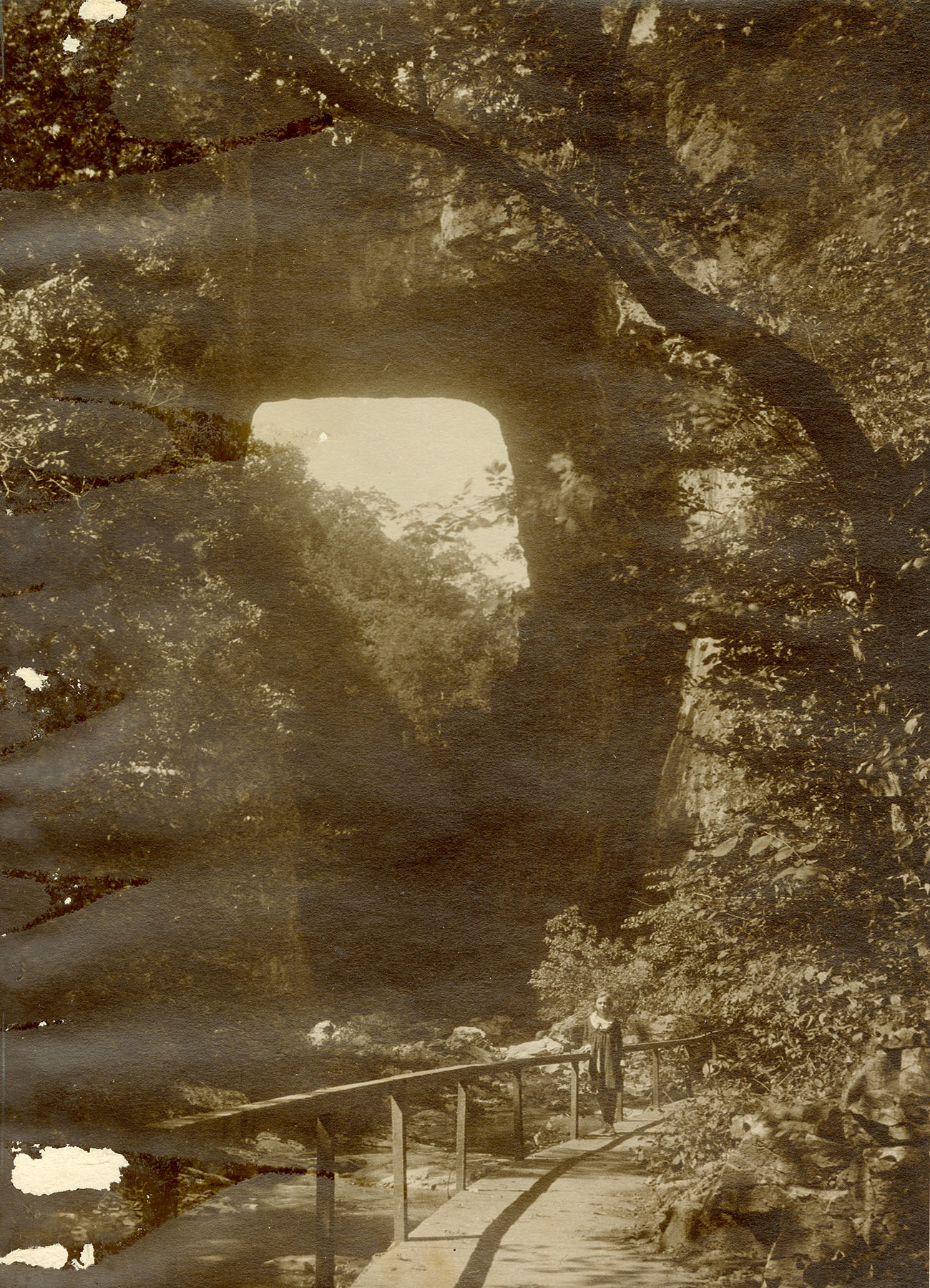 Jefferson purchased 157 acres of land from King George III, which included the Natural
Bridge, and later surveyed and built on the area. The Natural Bridge was immortalized
in an 1835 painting by Jacob Caleb Ward and referred to in Herman Melville's 1851
Moby Dick, and by the nineteenth century was one of America's most visited tourist
attractions.
Jefferson purchased 157 acres of land from King George III, which included the Natural
Bridge, and later surveyed and built on the area. The Natural Bridge was immortalized
in an 1835 painting by Jacob Caleb Ward and referred to in Herman Melville's 1851
Moby Dick, and by the nineteenth century was one of America's most visited tourist
attractions.
This photograph of the Natural Bridge was taken during the 1870s, at the height of the landmark's popularity, courtesy of the Margaret Fayerweather Meigs Photograph Collection. Though perhaps not as popular a destination as it was in previous centuries, it remains as awe-inspiring as ever.
 Also known as the Grand Old Ditch, the Chesapeake and Ohio Canal were a 185-mile-long canal built along the Potomac River between Washington, D.C.
and Cumberland, Maryland. The C&O Canal, as it is often abbreviated, was built to
replace the Patowmack Canal, and primarily moved coal from the Allegheny Mountains.
Construction began in 1828, and the C&O operated from 1831 until 1924, when a flood
caused major damage and eventually led to the abandonment of the canal. Several more
floods have occurred in the years following, each flood causing further damage to
the canal and its structures, and restoration of the canal continues today. In 1961,
The Chesapeake and Ohio Canal was declared a National Monument by President Eisenhower,
indicating the importance of the canal, and the coal it carried, to the entirety of
the nation. However, people continued to live along the canal until the National Park
was established in 1971.
Also known as the Grand Old Ditch, the Chesapeake and Ohio Canal were a 185-mile-long canal built along the Potomac River between Washington, D.C.
and Cumberland, Maryland. The C&O Canal, as it is often abbreviated, was built to
replace the Patowmack Canal, and primarily moved coal from the Allegheny Mountains.
Construction began in 1828, and the C&O operated from 1831 until 1924, when a flood
caused major damage and eventually led to the abandonment of the canal. Several more
floods have occurred in the years following, each flood causing further damage to
the canal and its structures, and restoration of the canal continues today. In 1961,
The Chesapeake and Ohio Canal was declared a National Monument by President Eisenhower,
indicating the importance of the canal, and the coal it carried, to the entirety of
the nation. However, people continued to live along the canal until the National Park
was established in 1971.
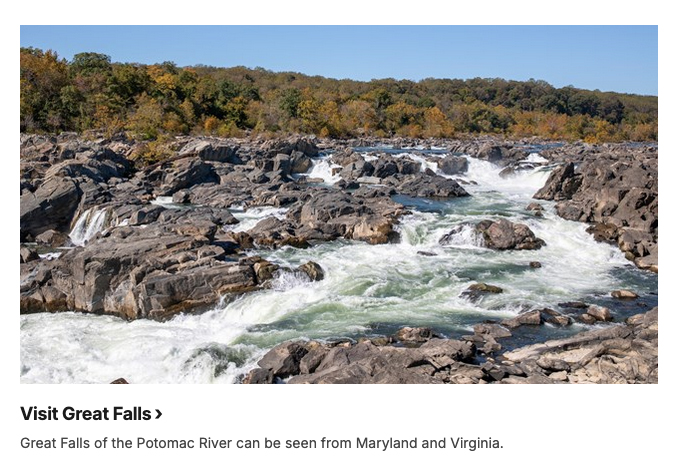
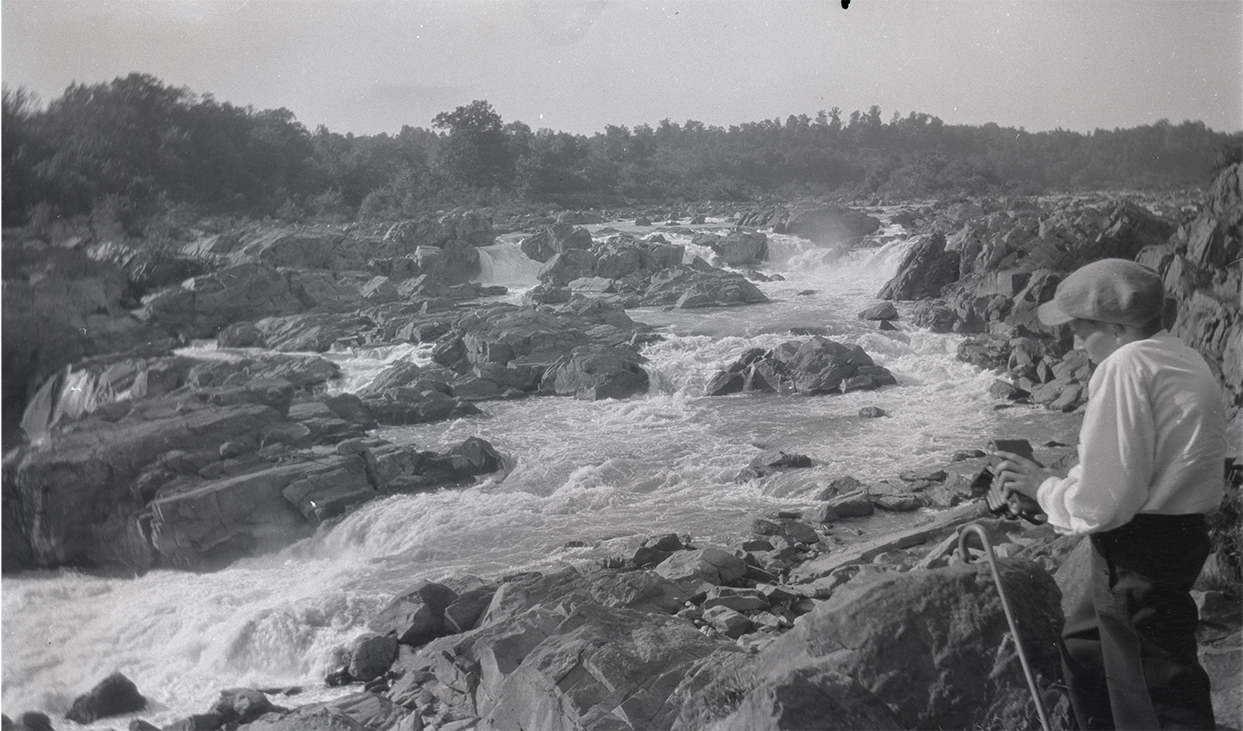 That means that this negative of the Chesapeake and Ohio Canal, courtesy of MS-0119,
Albury Hopkins Moore, class of 1930 negatives, was taken from before the C&O Canal
was established as a National Monument or National Park. This negative was taken around
1926, just a few years after the destructive flood that forced the canal to cease
operations. Today, the C&O Canal is used by millions of visitors who come to explore
the site's unique recreational opportunities and the regional history.
That means that this negative of the Chesapeake and Ohio Canal, courtesy of MS-0119,
Albury Hopkins Moore, class of 1930 negatives, was taken from before the C&O Canal
was established as a National Monument or National Park. This negative was taken around
1926, just a few years after the destructive flood that forced the canal to cease
operations. Today, the C&O Canal is used by millions of visitors who come to explore
the site's unique recreational opportunities and the regional history.
As the weather grows warm and spring fever begins to spread, we encourage the Washington College community to explore the variety of local, state, and national parks within the region. If you prefer to stay inside, however, you can check out Maryland travel guides from our circulating collections, or travel through time by making an appointment to visit the Archives.