
Ecotherapy Course Helps Students Reduce Stress
Special Topics Course Connects Students with Nature to Explore Therapeutic Benefits
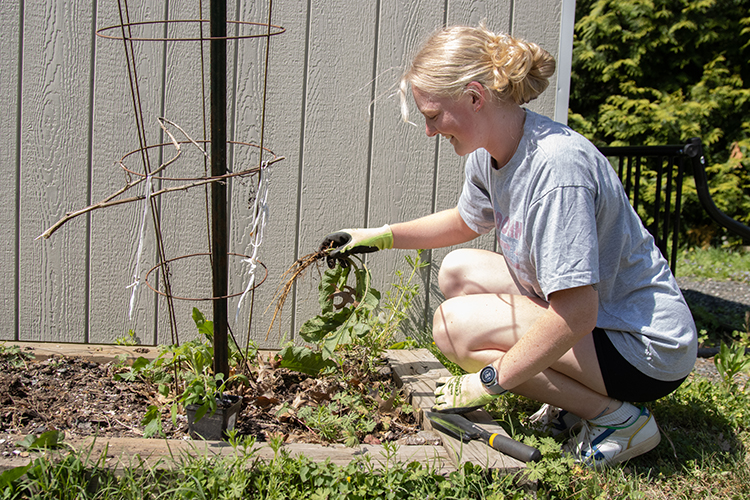
The Campus Garden is starting to breathe new signs of life as the spring semester comes to a close. That’s thanks in part to the students enrolled in PSY-294: Ecotherapy, a special topics course taught by Visiting Assistant Professor of Psychology Nikki Hurless.
Ecotherapy is an umbrella term in clinical psychology referring to using nature in a therapeutic way and looking at healthcare and wellness through the lens of nature. Hurless designed the course so that students would be introduced to a “foundation of mindful awareness” and build on the skillset throughout the semester.
“As people we know being outdoors is good for us,” said Heather Lamont ’26, a psychology major with a clinical counseling concentration. “I like that we took on a scientific approach as to why and what we do to bring [nature] indoors. We had conversations about indoor plants, we had a reading about essential oils and how the smells of nature can connect you back into nature even if you aren’t in it.”
Early on, activities included taking walks to notice the world around them without judgement. Most of these early activities happened on campus because it’s a built environment.
Hurless said on-campus activities were important to show students that “they don’t have to go elsewhere to get the benefits of ecotherapy.”
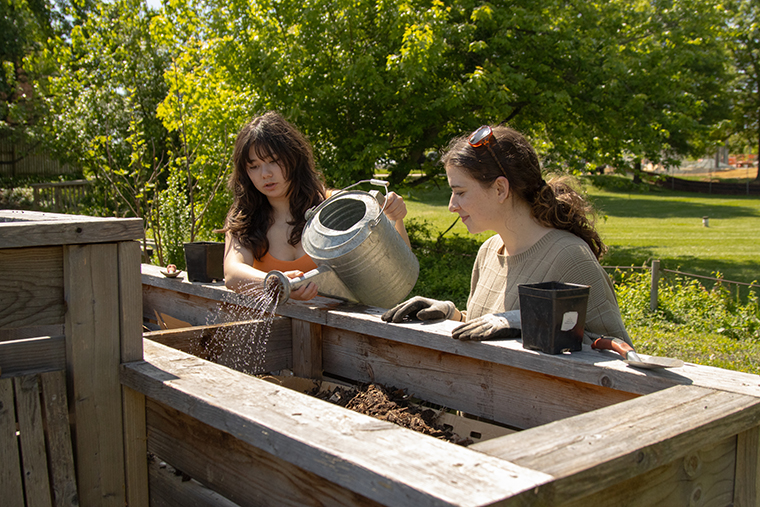
As the semester went on, activities became more complex. The class mapped nature walks, went birding, and explored natural sounds versus man-made ones. Toward the end of the semester, the class visited an equestrian barn to engage with horses and the Campus Garden to get their hands dirty in the soil.
Throughout the semester, Hurless had students begin and end every class with a self-assessment about their mood. In their last class, Hurless revealed that, according to their self-assessments, the class’s average stress level was reduced by 13 points over the course of the semester.
Hurless wasn’t surprised by this data trend generally—being outside leads to improved mood and restoration—but she was surprised which specific class times brought the most positive impacts.
When Ecotherapy started in January, there were several snow storms that cancelled classes or pushed them online. When Hurless’s class was finally able to meet for the first time, it was 20 degrees—a stark contract to their last class: closer to 70 degrees and sunny.
Despite being so cold out, students spent that first class outside just walking.
“Not everyone liked the lack of structure, but they worked within that distress tolerance,” Hurless said. That distress tolerance is the edge of comfort, where you are able to grow through your discomfort.
Throughout the semester, students built up their tolerances and did so with minimal complaints.
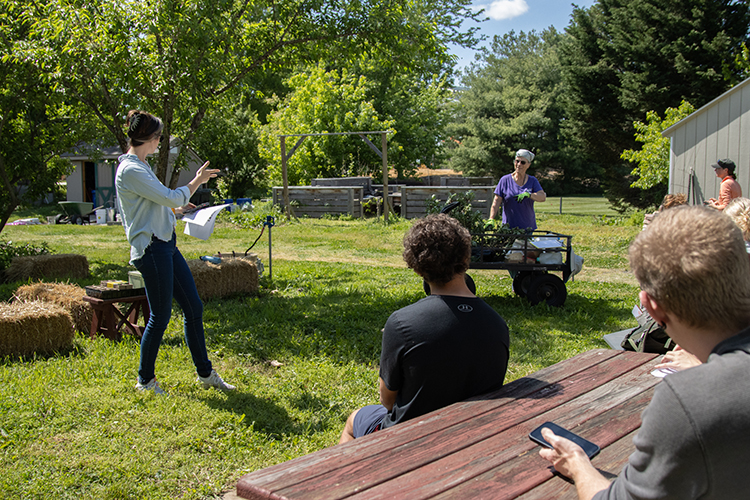 In those last classes of the semester, students worked with the University of Maryland
Extension Master Gardeners to weed and plant various vegetables and plants throughout
the space.
In those last classes of the semester, students worked with the University of Maryland
Extension Master Gardeners to weed and plant various vegetables and plants throughout
the space.
“It’s been a neat partnership to bring together University of Maryland Extension and the students,” said Kathy Thornton ’13, Natural Lands Project field technician and one of the overseers of the Campus Garden. “We’ve accomplished so much with their help.”
—MacKenzie Brady '21