Maryland and the 13th Amendment
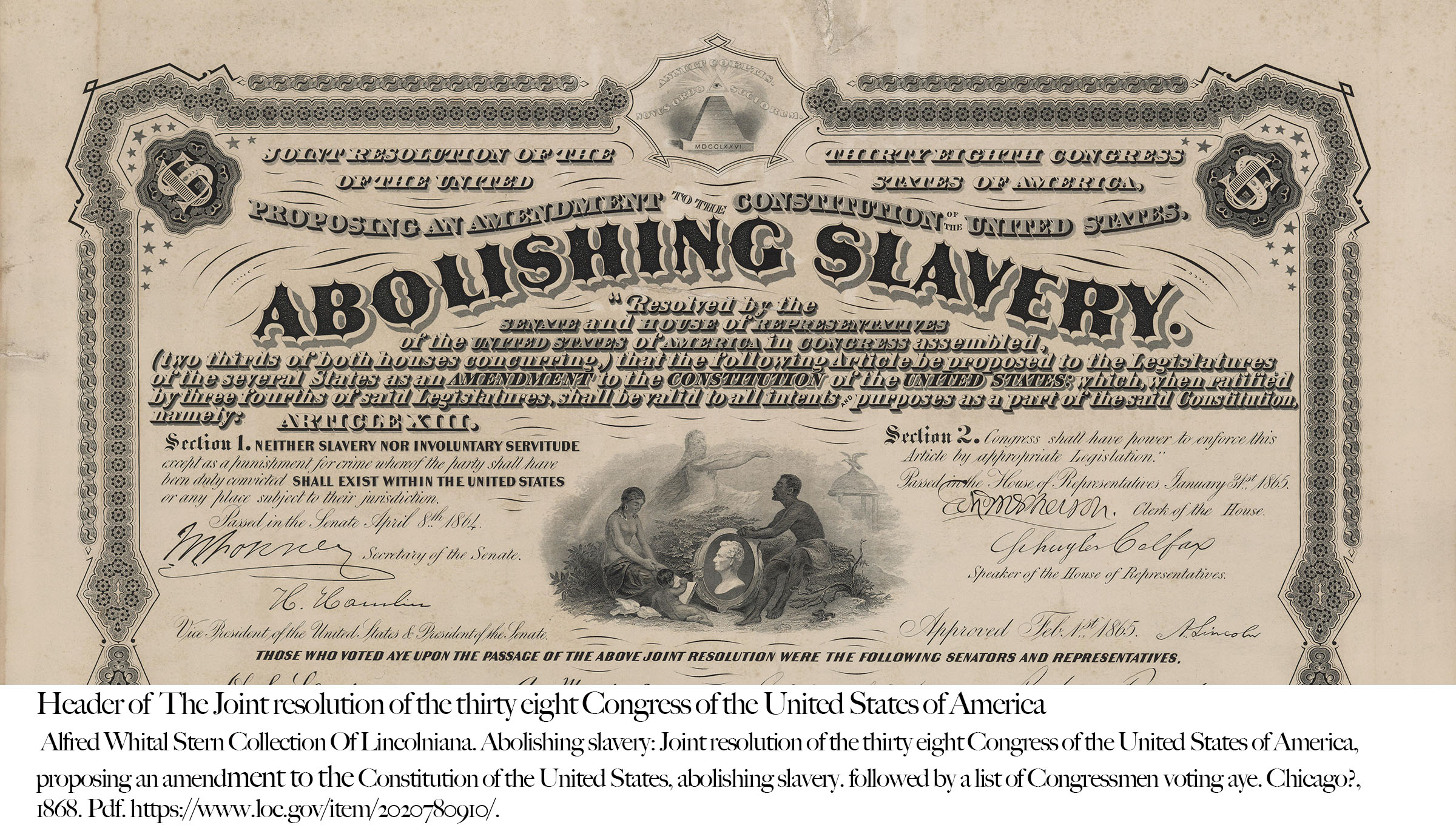
The Old-Line State has always had a difficult relationship with slavery.
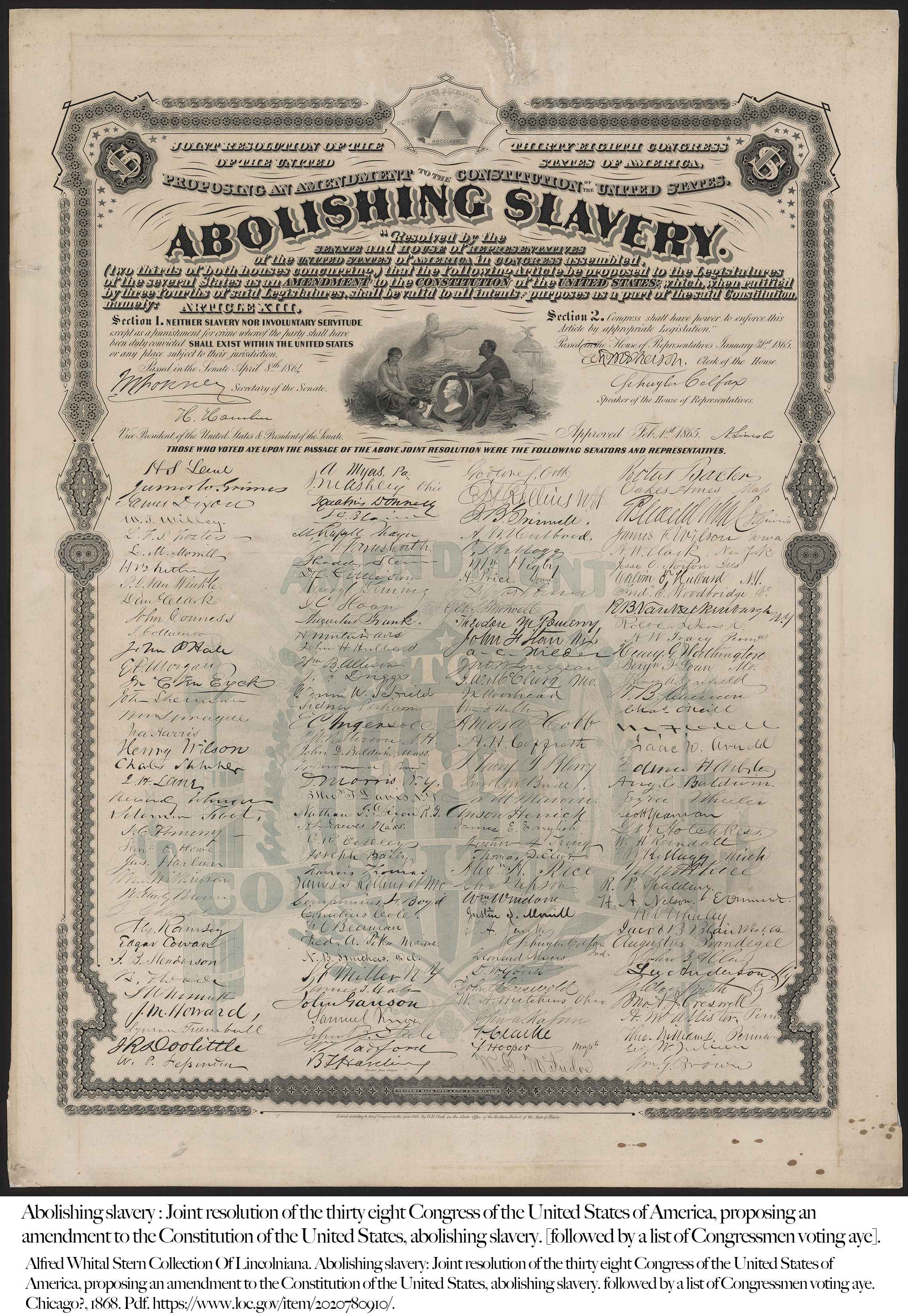
On February 3, 1865, Maryland, along with Michigan and New York, ratified the 13th Amendment to the United States Constitution, marking it as the 4th state of the newly restored Union to do so.
The Thirteenth Amendment abolished slavery and involuntary servitude, except as punishment for a crime.
“Section 1. Neither slavery nor involuntary servitude, except as a punishment for crime whereof the party shall have been duly convicted, shall exist within the United States, or any place subject to their jurisdiction.
Section 2. Congress shall have power to enforce this article by appropriate legislation.”
 Amendments are an important part of American Democracy; they remind us that, as society
evolves, so must the rules and laws that bring order to it. Although the Constitution
is meant to guide us, it does not contain all the answers. The Constitution, after
its famous preamble, is made up of seven articles that give us the structure, responsibilities,
and limitations of all parts of Government. It was ratified on June 21, 1788. In only
three years, it was deemed necessary to add amendments; ten were added, the Bill of
Rights, ratified December 15, 1791. As our Founding Fathers worked to craft the Constitution,
conversations regarding the nation's stance on slavery were being discussed. Sadly,
these minds that gave our nation so much decided to kick this issue down the road.
It would take decades of institutional inhumanity, four years of bloody war, and the
testing of our fragile union before the nation gave its final stance. It took even
longer for those it affected most to learn of it.
Amendments are an important part of American Democracy; they remind us that, as society
evolves, so must the rules and laws that bring order to it. Although the Constitution
is meant to guide us, it does not contain all the answers. The Constitution, after
its famous preamble, is made up of seven articles that give us the structure, responsibilities,
and limitations of all parts of Government. It was ratified on June 21, 1788. In only
three years, it was deemed necessary to add amendments; ten were added, the Bill of
Rights, ratified December 15, 1791. As our Founding Fathers worked to craft the Constitution,
conversations regarding the nation's stance on slavery were being discussed. Sadly,
these minds that gave our nation so much decided to kick this issue down the road.
It would take decades of institutional inhumanity, four years of bloody war, and the
testing of our fragile union before the nation gave its final stance. It took even
longer for those it affected most to learn of it.
It is important to note that the language “punishment for a crime” led to its own form of slavery. Jim Crow laws began to spring up that criminalized innocuous statutes, like loitering, allowing the law to place African Americans, from children to adults, into chain gangs and forced labor. Many Southern states still employ convict labor, to the point where government institutions must use them first rather than contract out. With the rapid commodification of the American Prison system, forced labor of those incarcerated could be seen as the last vestige of slavery and how deeply it has rooted itself into our economy.
Maryland has always been a border state, to the South of the industrial abolitionist North, and to the North of the cash crop system built on slavery of the South. During the Civil War, it remained with the Union, but many in the state benefited from slavery and wanted to see it continue. It is then surprising that in 1864, a full year before the nation ratified it, Maryland abolished slavery in its constitution. The previous constitution of 1851 had forbidden passing “any law abolishing the relation of master or slave, as it now exists in this state.” As the Civil War was ending, the Union Governor and legislature were able to push through the change; they even made provision for soldiers serving in the field to vote. Representatives for Kent County, all former members of the Washington College Board of Visitors & Governors, were David C. Blackiston, George S. Hollyday, and Ezekiel Forman Chambers, a slave owner. Chambers believed strongly in the institution of slavery and defended it on moral, religious, and legal grounds.
 Since the Eastern Shore of Maryland has been, and still is, primarily an agricultural
economy, the use of enslaved individuals was firmly entrenched. While we did not have
the large plantations with hundreds of enslaved people like the deep South. There
were still wealthy individuals able to own others and make more money by renting out
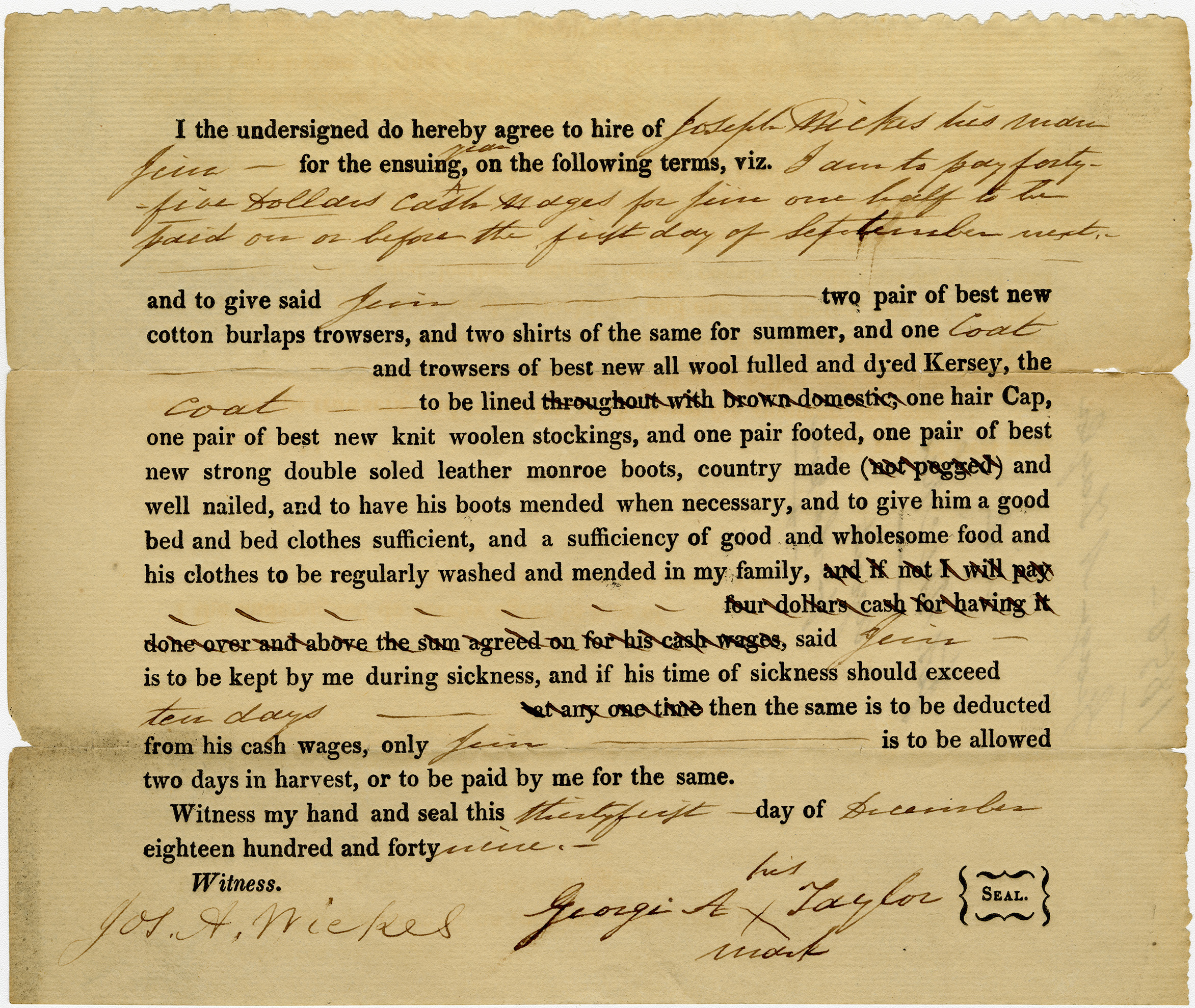
their services. The Joseph R. Wickes papers have numerous receipts between farms for the rental of individuals. These amounted
to lease agreements; they included a time frame, a fee that did not go to the enslaved
person, clothing that was to be supplied, and occasionally what would happen if the
person fell ill for more than a few days. The Commodore collection, available through The Chesapeake Heartland, has even more primary source material
that gives life and context to the African American experience in Kent County.
Since the Eastern Shore of Maryland has been, and still is, primarily an agricultural
economy, the use of enslaved individuals was firmly entrenched. While we did not have
the large plantations with hundreds of enslaved people like the deep South. There
were still wealthy individuals able to own others and make more money by renting out
their services. The Joseph R. Wickes papers have numerous receipts between farms for the rental of individuals. These amounted
to lease agreements; they included a time frame, a fee that did not go to the enslaved
person, clothing that was to be supplied, and occasionally what would happen if the
person fell ill for more than a few days. The Commodore collection, available through The Chesapeake Heartland, has even more primary source material
that gives life and context to the African American experience in Kent County.
 While none of the battles of the Civil War directly affected the Eastern Shore, we
do have some accounts of what the war was like for students at Washington College.
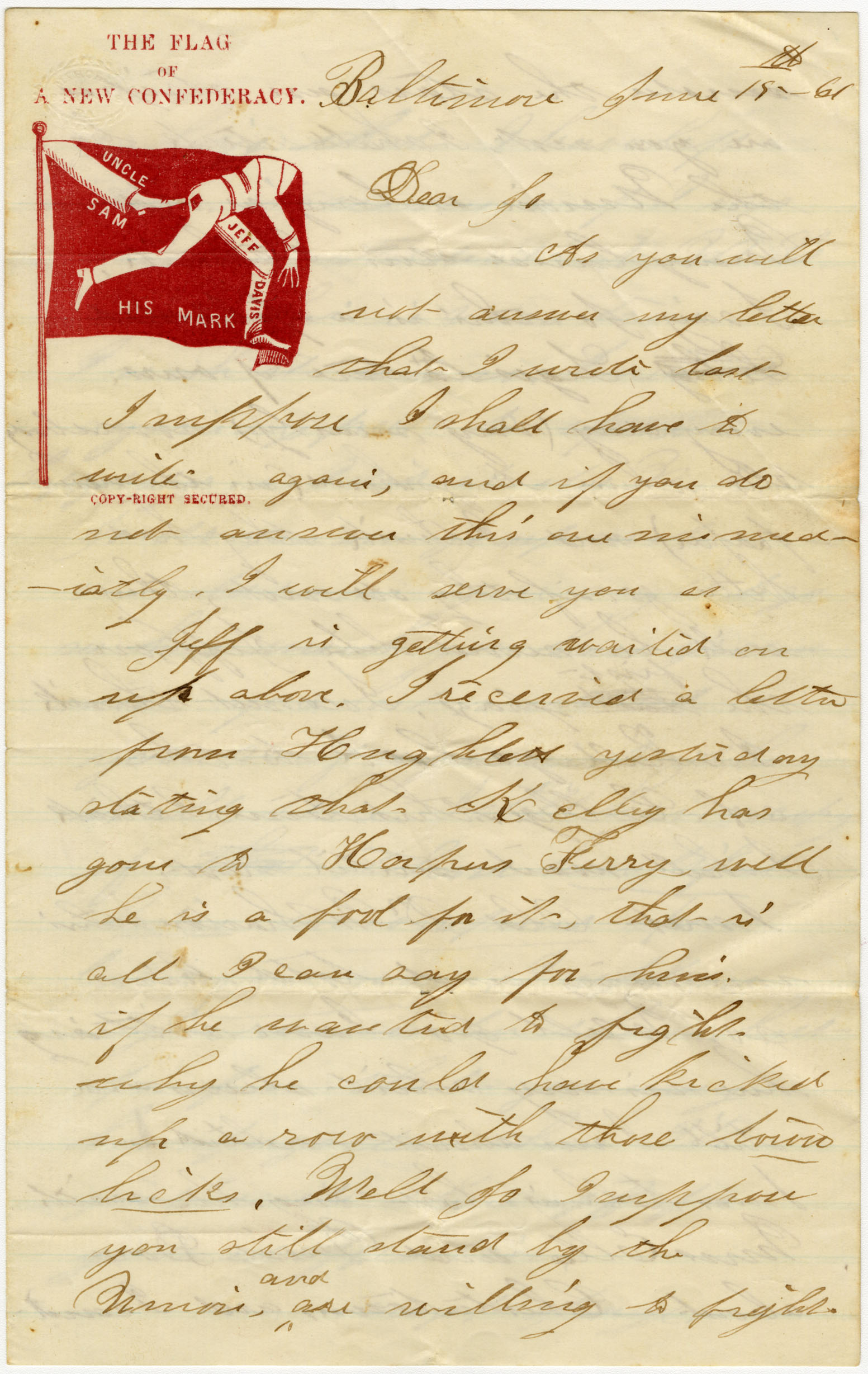
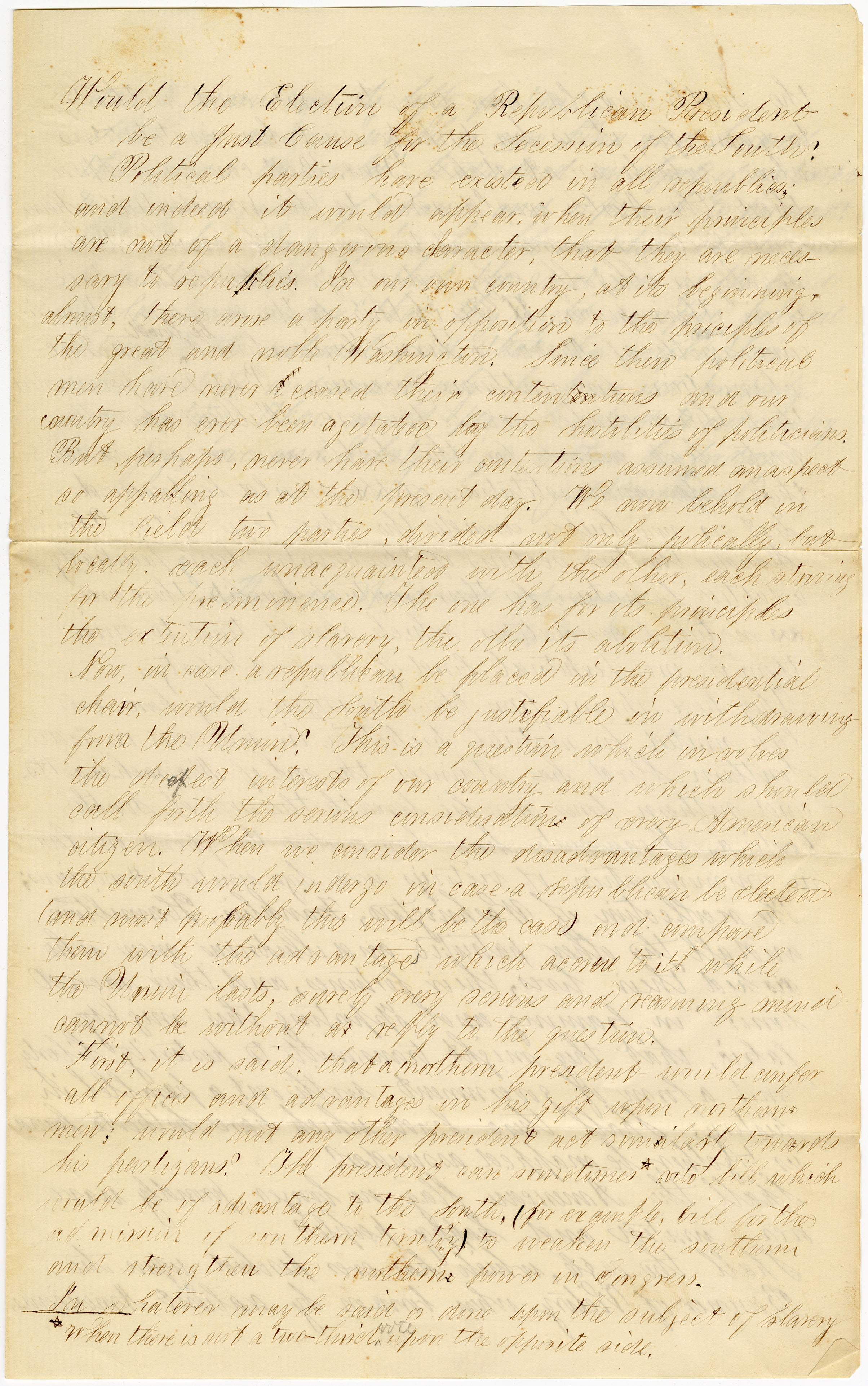
The papers of Joseph Burchinal, class of 1860, contains correspondence for the start of the War and includes an
essay he wrote on the topic. This collection seems to epitomize the conflicting nature
of Maryland at the time, considering itself both Southern and generally pro-slavery,
yet also loyal to the Union. This is especially apparent in his 1860 essay “Would the Election of a Republican President be Just Cause for Secession of the
South.” In a war that pitted brother against brother, Joseph's brother served in the
Union. William D. Burchinal (1832-1899) became a Captain in the Union Army, serving
with Company D of the Second Regiment, Eastern Shore Infantry. Joseph Burchinal did
not serve in the Civil War.
While none of the battles of the Civil War directly affected the Eastern Shore, we
do have some accounts of what the war was like for students at Washington College.
The papers of Joseph Burchinal, class of 1860, contains correspondence for the start of the War and includes an
essay he wrote on the topic. This collection seems to epitomize the conflicting nature
of Maryland at the time, considering itself both Southern and generally pro-slavery,
yet also loyal to the Union. This is especially apparent in his 1860 essay “Would the Election of a Republican President be Just Cause for Secession of the
South.” In a war that pitted brother against brother, Joseph's brother served in the
Union. William D. Burchinal (1832-1899) became a Captain in the Union Army, serving
with Company D of the Second Regiment, Eastern Shore Infantry. Joseph Burchinal did
not serve in the Civil War.
As we celebrate our 250th Anniversary, it is essential to acknowledge that an issue hotly debated by the Continental Congress took nearly a century to be officially resolved. Its legacy is still felt every day by millions in our society.